
Time 19:00
The Royal Theatre in the Old Orangery in the Royal Łazienki Museum
BUY TICKET
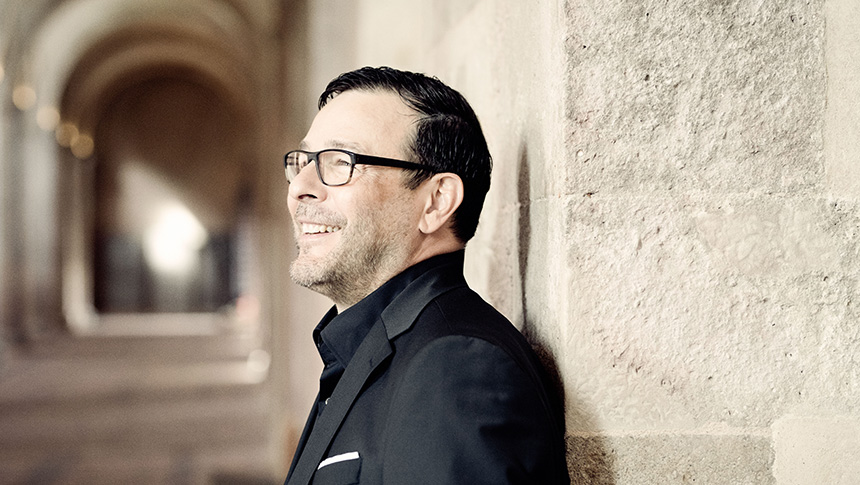
The cantatas written by Johann Sebastian Bach throughout his life are rich in symbolism and express the abundance of meaning contained within the Baroque musical language. During the concert, the refined craft of the Leipzig cantor will be showcased in the interpretation of Andreas Scholl, one of the world’s most prominent countertenors. This will be the first time that this outstanding artist, renowned for his performances of early music, will appear on a Warsaw stage.
The concert will open with the solo cantata Ich habe genug, BWV 82, written for bass voice and composed for the Feast of the Presentation of the Lord on February 2, 1727. However, Bach returned to this work three more times: in 1731, he created a version for soprano, in 1735 for mezzo-soprano, and in February 1747, he entrusted the solo part to his son-in-law, who sang alto. The libretto’s mystical longing for death, inspired by the hope of union with Christ, finds a profound and ambiguous expression in the musical means employed by the composer. The opening aria and its corresponding closing section are enriched by a stunning oboe part. In passages filled with dissonances and sigh motifs, one can hear the sorrows of earthly existence, but also the faith that fills the heart with joy at the prospect of an imminent meeting with God. The lullaby-like third movement offers a gentle cradle to sleep – after which comes an awakening in heaven.
The longing for union with God is also the theme of the cantata Vergnügte Ruh, beliebte Seelenlust, BWV 170, which was first performed on July 28, 1726. The work opens with a moving aria whose pastoral character was a clear allusion to the image of Christ as the Good Shepherd for an 18th-century listener. The “blissful peace” and “joy of the soul” will be experienced by the redeemed in the heavenly pastures, the path to which leads through the renunciation of sin and the embrace of the path of virtue. A perfect musical depiction of this journey can be found in Bach’s compositional techniques – in his instrumentation, melodic invention, and expressive means. Between the two cantatas, we will hear the Ouverture in G minor by Johann Bernhard Bach (1676–1749), a distant relative of the Leipzig cantor. This composer spent most of his life at the ducal court in Eisenach and serving at the Church of St. George. However, his remarkable instrumental works soon reached Leipzig and were incorporated by Johann Sebastian into the repertoire of the Collegium Musicum.
Marta Dziewanowska-Pachowska
PROGRAM
Johann Sebastian Bach – Cantata Ich habe genug, BWV 82
Aria: Ich habe genug
Recitative: Ich habe genug
Aria: Schlummert ein , ihr matten Augen
Recitative: Mein Gott! wenn kömmt das schöne: Nun!
Aria: Ich freue mich auf meinen Tod
Johann Bernhard Bach – Ouverture-Suite in G minor
Ouverture | Air | Rondeau | Loure | Fantaisie | Passepied
Johann Sebastian Bach – Cantata Vergnügte Ruh, BWV 170
Aria: Vergnügte Ruh, beliebte Seelenlust
Recitative: Die Welt, das Sündenhaus
Aria: Wie jammern mich doch die verkehrten Herzen
Recitative: Wer sollte sich demnach wohl hier zu leben wünschen
Aria: Mir ekelt mehr zu leben
PERFORMERS
ANDREAS SCHOLL COUNTERTENOR
THE PERIOD INSTRUMENTS ENSEMBLE OF THE POLISH ROYAL OPERA CAPELLA REGIA POLONA
KRZYSZTOF GARSTKA HARPSICHORD / POSITIVE ORGAN, CONDUCTOR
The seats in the auditorium are not numbered.
Patron of the Polish Royal Opera
Patron of Opera on Tour


